Cultural capital
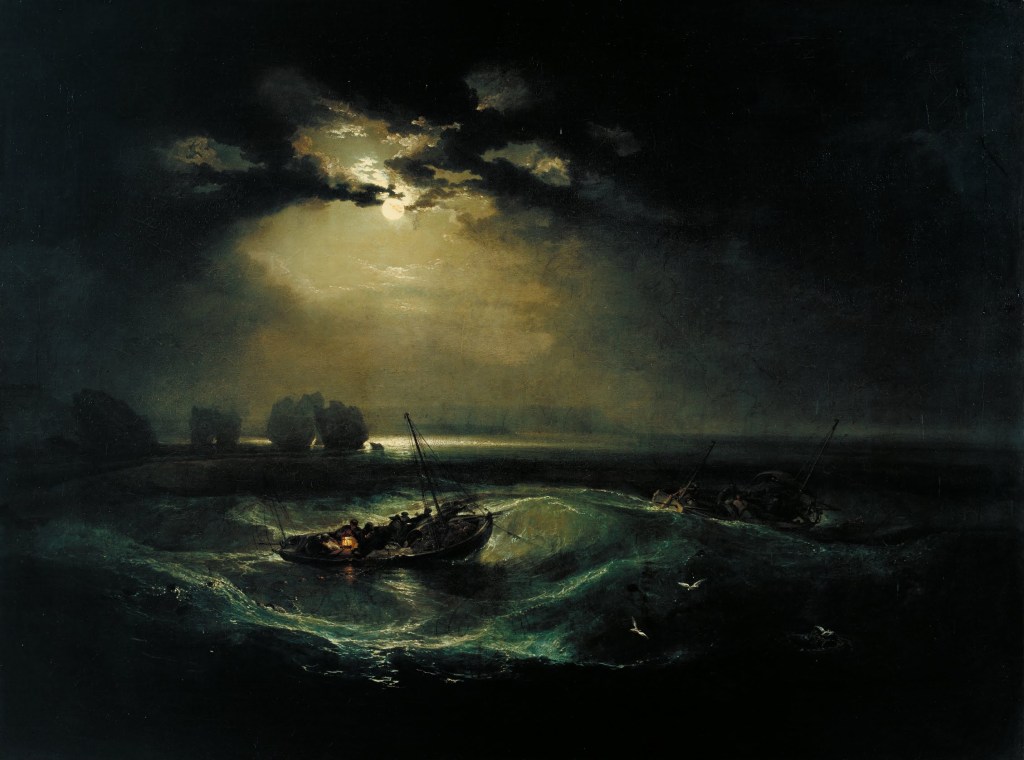
For my latest piece of IGCSE coursework, I have been working on incorporating artwork into my students’ writing by using it as a stimulus for their work. We have been investigating JMW Turner, an artist that I remember having a big emotional reaction to when I was in my teens, and one which made me see through the mustiness of an art gallery for the first time. I hope I’ve been able to pass this new-found enthusiasm to my students.
My students were given a painting as a stimulus. I then set them homework to research several different eras of art and literature which were relevant to this painting, and would help them understand the philosophical context in which it was painted. They were then asked to look at the painting for a few minutes, just to take it all in (yes, it’s crass to think you can ‘take it all in’ in a few minutes, but…time constraints…) In doing this, we have been able to link together several seemingly disparate fields of creativity: art, history, and writing. This way, students were able to consciously create work that forms part of a wider creative discourse: they can understand that ideas are products of one another, that a successful society relies on the ideas of those before us, and that looking at alternative perspectives brings depth to our work. If an idea came from nowhere, it would have been more sophisticated if you’d listened to alternative perspectives, right?
Seeing through cultures and eras
Granted, the artist I chose is Eurocentric and certainly was not without flaws, but my aim was to demonstrate to my students the emotional connection you can have to seemingly aloof canvases hung on the walls of fusty old galleries. Let me explain… I discovered him when I was around the same age as my students. Even better, I was 16, a year or two older, which gives any teen an aspirational attitude. Turner made me appreciate that people have felt the same emotions and been amazed by the same things throughout the centuries: he also showed to me the universally awesome power of nature.
Turner was painting during a period of massive unrest in Europe, where the sea was used as a battleground, was both tranquil and deadly, and could toss people’s lives in the air. To some extent, the seas are like this today. Students didn’t need long before their ideas were blossoming and they were exploring links between the painting and more recent images they’d seen in the media: some of them made links between the small boat in the painting and the experience of a migrant crossing the English Channel on a dinghy.
Reading emotions into works
My students have now submitted their coursework, but what each piece has in common pretty much stops at the stimulus. This is just what I want, and just what I should expect: everyone brings their own perspectives and ideas to a piece of artwork: yes, the curtains are blue, but do you like the colour? Everyone will have different ideas and opinions on those good ol’ blue curtains. For instance, you may think the choice of colour is clichéd.
Some of the students pointed out features of the painting I had not even noticed, or they interpreted these in ways that I’d never have anticipated: the light source — is it reassuring, threatening, or does it just highlight how bad the boat’s situation is? Those objects in the distance: are they other boats coming to help, or are they jagged cliffs? Could they just be shadows? Make of it what you will: form is in the eye of the beholder.
 My Early career teaching